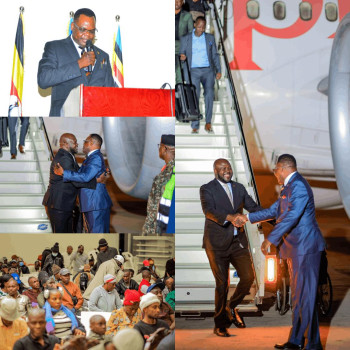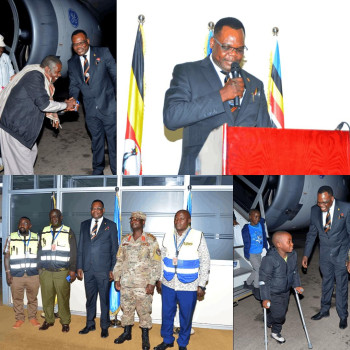
ENTEBBE, UGANDA — On the Thursday night of Thursday, July 9, 2026 close to midnight, the wheels of a chartered aircraft touched down smoothly at Entebbe International Airport, bringing an end to a harrowing chapter for hundreds of Ugandan nationals. As the aircraft taxied to a halt, it brought home 219 men, women, and children—the sixth and final airfunded cohort fleeing a devastating wave of anti-migrant protests and xenophobic violence in South Africa.
With this final landing, the Government of Uganda successfully concluded the largest airlifting evacuation exercise in the nation's history, bringing the total number of official air evacuees to 1,102.
Yet, the story of this great exodus extends far beyond the tarmac of Entebbe. Alongside those airlifted by the state, hundreds of other resilient Ugandans loaded up their belongings and made their way back to the safety of home by road. In a remarkable display of grit, caravans of Ugandan-registered and foreign-plated vehicles traversed thousands of kilometers through Zimbabwe, Zambia, and Tanzania, determined to escape the escalating volatility of a changing South Africa and find sanctuary under the Ugandan flag.
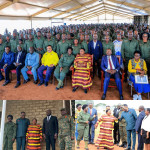
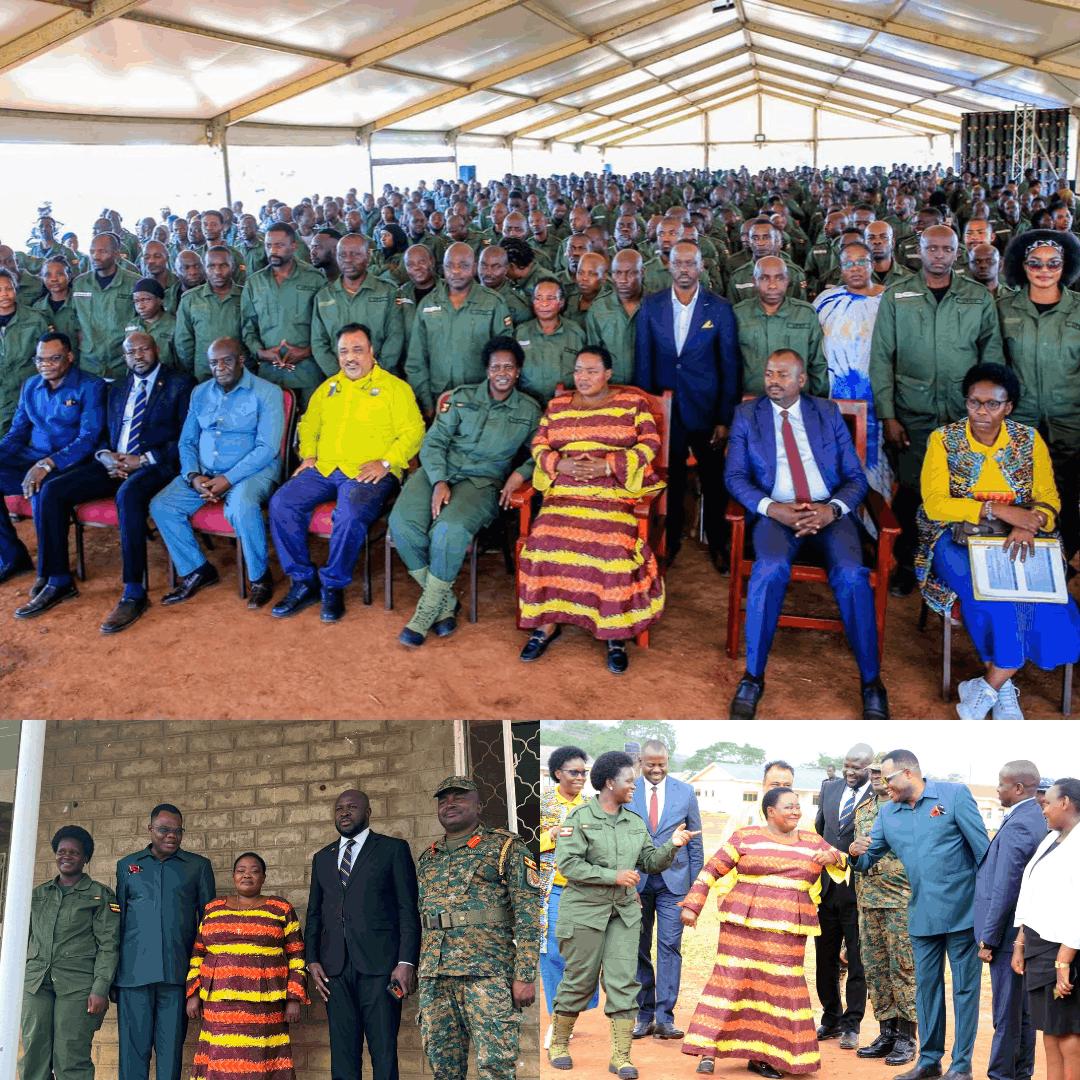
Following their tactical arrival on the frontline, the returnees were immediately escorted to the National Leadership Institute (NALI) in Kyankwanzi for a high-profile state reception. Leading the nation's political elite to officially welcome the returnees back home was the Rt. Hon. Prime Minister, Robinah Nabbanja, alongside a delegation of senior cabinet leaders, including the Acting Minister of Foreign Affairs, Hon. Kyeyune Haruna Kasolo; the Minister of Trade, Industry and Cooperatives, Hon. Sanjay Tanna; and the Minister of Lands, Housing and Urban Development, Hon. Judith Nabakooba. Accompanied by Uganda’s High Commissioner to South Africa, Ambassador Paul Amoru, the Prime Minister and her ministers personally interacted with the evacuees, guiding them through various socio-economic development initiatives and showcasing the abundant local opportunities available for personal growth and active contribution to national development.
To fully understand the gravity of this evacuation, one must look back at the deep history that binds Uganda and South Africa. This is not merely a relationship of trade, but of liberation. During the darkest days of South Africa’s Apartheid regime, Uganda stood as an unyielding bulwark of African solidarity. Under the leadership of the National Resistance Movement and President Yoweri Kaguta Museveni, Uganda provided crucial diplomatic, financial, and military support to the African National Congress. In the late 1980s and early 1990s, Uganda hosted Umkhonto we Sizwe freedom fighters, offering them sanctuary and training grounds in Kaweweta when much of the world turned a blind eye.
Following South Africa’s liberation in 1994, this geopolitical brotherhood transformed into an economic pipeline. Over the next three decades, South Africa became a prime destination for both highly skilled and semi-skilled Ugandan labor. Ugandan doctors, academics, engineers, corporate executives, and informal traders migrated south, injecting their intellect and energy into the South African economy, while contributing heavily to Uganda’s development through remittances.
However, the recent explosion of violent anti-migrant sentiment and targeted xenophobia fractured this promise of prosperity. Left vulnerable in a foreign land they once helped liberate, Ugandans found themselves facing a stark choice: stay and risk the rising tide of violence, or return to the birthplace of their ancestors.
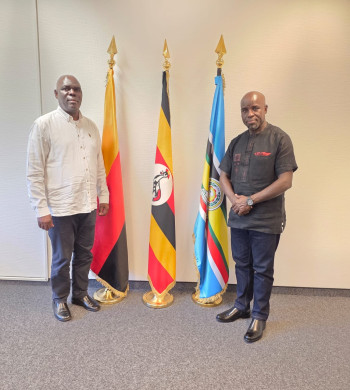
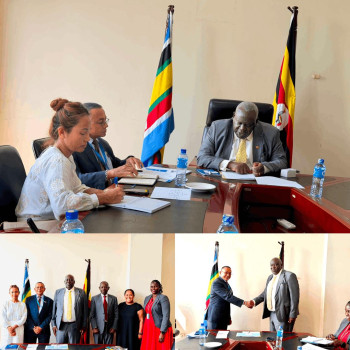
Receiving the returnees, Ambassador Dickson Ogwang-Okul, representing the Ministry of Foreign Affairs, made the nation's stance clear. He noted that the core mandate of the Ministry of Foreign Affairs is to promote and protect Uganda’s interests abroad, declaring that the diaspora is the nation's primary interest, wherever they may be. He emphasized that the Government of Uganda does not, and will not, look away when its people are in distress.
This operation is not an isolated incident, but the manifestation of a deeply entrenched national security doctrine. Uganda has built an unyielding track record of executing daring, complex evacuations across the globe when its citizens are threatened.
During the outbreaks of civil conflict in South Sudan in 2011, 2013, and 2016, the UPDF executed high-stakes, armed overland and air extractions of thousands of Ugandan traders and trapped civilians from Juba and Nimule. Later, during the darkest days of the COVID-19 pandemic, the government systematically organized repatriation flights to bring stranded citizens home from virtually every continent amidst global airspace shutdowns. When Khartoum erupted into civil war in 2023, Uganda successfully evacuated over 200 nationals from Sudan, routing them safely by bus through the volatile Ethiopian border before flying them home. Similar quiet, highly coordinated diplomatic and intelligence maneuvers have recently extracted Ugandans caught in Middle Eastern geopolitical crossfires in Iran and human trafficking syndicates in Myanmar.
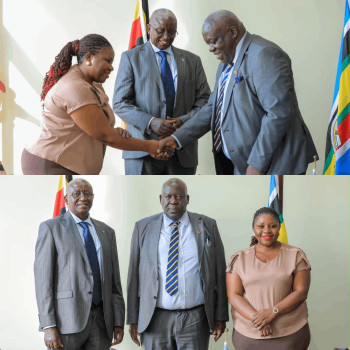
The sheer scale of this latest South African evacuation required flawless, clockwork precision among various arms of government. Crucial to this success was the stellar technical leadership at the Ministry of Foreign Affairs, driven by the Permanent Secretary, Hon. Bagirye Vincent Waiswa, whose administrative guidance ensured that logistical networks remained seamless. This technical machinery was fortified by the political patronage of Acting Minister Hon. Kyeyune Haruna Kasolo. Together, their steadfast institutional backing provided the vital foundation that supported Ambassador Ogwang-Okul’s frontline reception efforts and enabled Ambassador Paul Amoru’s relentless diplomatic maneuvers on the ground in South Africa.
Working tirelessly in Pretoria and Johannesburg alongside Mr. Kibomboli, Chairman of the Ugandan Community in South Africa, Ambassador Amoru navigated a complex diplomatic landscape to register, protect, and safely escort the returnees to the aircraft. From the military command, the Chief of Defence Forces, General Muhoozi Kainerugaba, provided swift operational leadership and strategic execution that guaranteed the security and logistical feasibility of the airlifts. This defense apparatus worked in tandem with State House and the Special Forces Command, under the ultimate parental guidance and political will of the Commander-in-Chief, President Gen. Yoweri Kaguta Museveni.
For the returnees settling into NALI, the trauma of xenophobia is met with an immediate, structured safety net. The government has made it clear that this operation is not just about survival; it is about socio-economic revival. Xenophobia may have stripped these citizens of their physical properties in South Africa, but it could not erase their intellectual capital, their resilience, and their diverse skills. At Kyankwanzi, they will receive a comprehensive transition program featuring targeted psychosocial support to heal from the trauma of displacement, alongside entrepreneurial orientation and skilling workshops designed to help them anchor themselves firmly back into the country's economic landscape.
As Ambassador Ogwang-Okul beautifully noted by invoking an ancient African proverb, "The hunter’s home may be small, but it is where he finds peace."
The storm in the south has passed for these 1,102 citizens. Whether they arrived by air with nothing but hand luggage, or drove across international borders through the dust of the African continent, they are back where they belong. The soil beneath their feet is stable, their dignity has been restored, and a new dawn awaits them in the heart of Africa.