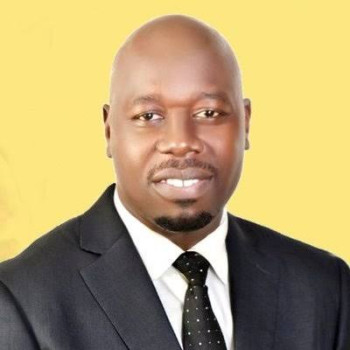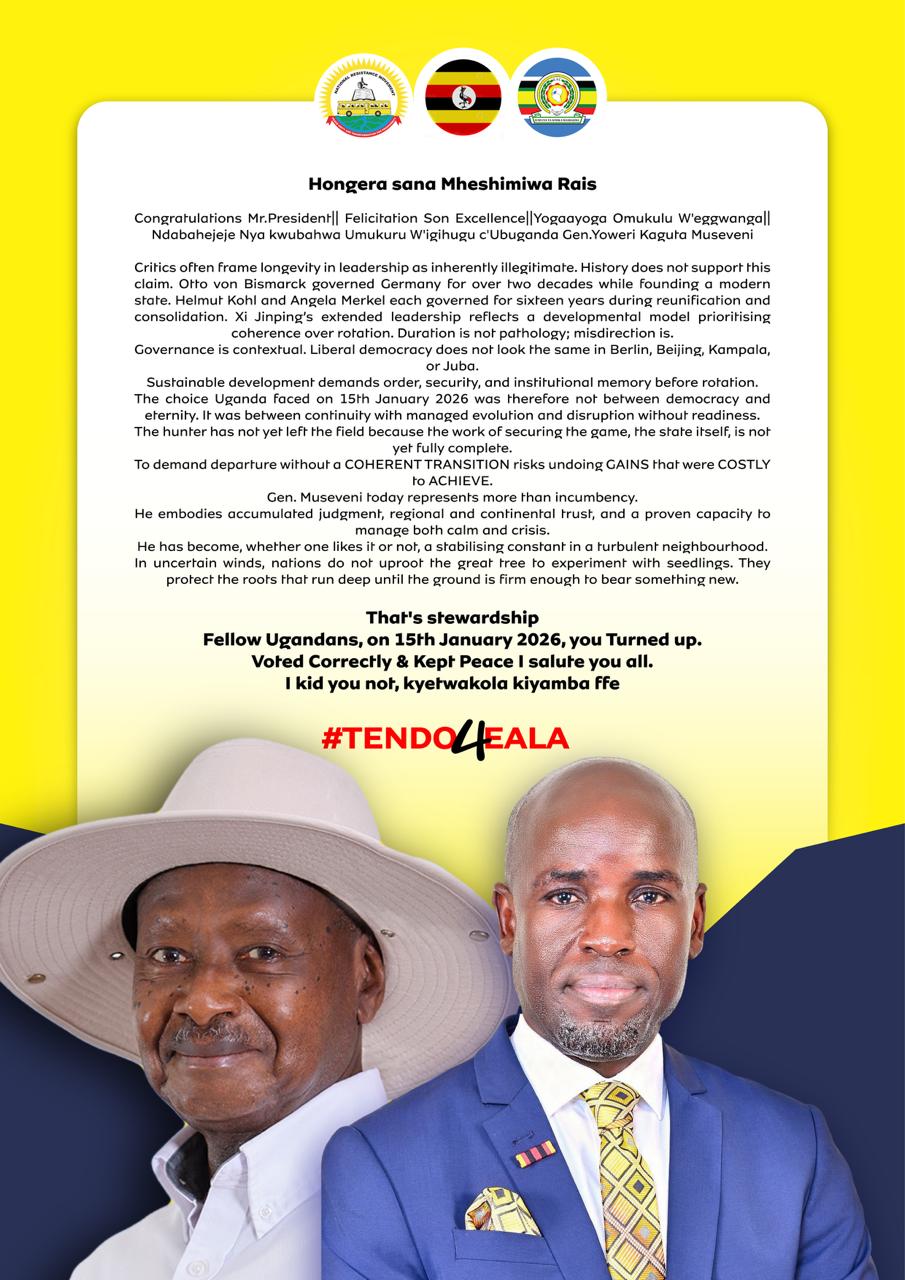
KAMPALA – Dr. Tendo Ronex Kisembo, an aspirant for the East African Legislative Assembly (EALA), has challenged Uganda and the wider East African Community to rethink their approach to regional and global trade, arguing that real power lies not in competition but in strategic collaboration among elites.
“Competition is at the bottom. People at the top are collaborating,” Kisembo said during an interactive session with trade stakeholders in Kampala. “Divided nations negotiate. United nations set the prices. Let that sink in.”
The outspoken aspirant, known for his unconventional economic analysis, used the platform to critique what he called a “scramble mindset” among East African states. He argued that while individual Ugandan, Kenyan, or Tanzanian businesses fight each other for small market shares, the real economic rules are written by a consortium of well-organized global players.
“Look at oil, look at grain, look at financing rates. Who sets those prices? A cartel of producers or a bloc of buyers. Never a fragmented region,” Kisembo added. “As long as we go to Arusha or Geneva as divided nations, we will forever beg at the negotiation table. When we speak as one bloc – when our EALA laws truly harmonize policy – we don’t negotiate. We publish the price.”
Kisembo’s remarks appeared aimed at both his competitors in the EALA race and current East African leaders. Without naming specific rivals, he suggested that those who waste energy on petty political infighting miss the larger picture.
“Other aspirants are busy attacking each other’s tribes or regions. That is bottom-level competition. Me? I am talking to the people at the top – the captains of industry, the policy architects – because that is where collaboration changes nations,” he said.
Political analysts note that Kisembo’s messaging taps into growing fatigue over the slow pace of the East African Federation project. While the EAC has made strides in customs union and common market protocols, member states still often act unilaterally on tariffs, non-tariff barriers, and external trade deals.
“Dr. Kisembo is right that unity creates pricing power,” said trade economist Dr. Florence Atim. “But the challenge is trust. At the top, collaboration is easy to claim and hard to enforce. His statement is a powerful ideal. The question is whether he can deliver it inside EALA.”
When asked how he would implement his “set prices, don’t negotiate” philosophy, Kisembo pointed to joint external tariffs and centralized procurement for strategic commodities like fertiliser, medicine, and energy.
“One East African buyer for vaccines. One bloc for negotiating railway equipment. That is not charity. That is leverage,” he said. “And that starts with EALA members who understand that the real competition is not Ugandan against Kenyan. It is East Africa against the world.”
Kisembo concluded with a direct appeal to voters: “Send me to Arusha if you want a legislator who doesn’t waste time on bottom-feeding fights. I am going to the top table. And at that table, we don’t compete. We collaborate – and we set the price.”
The EALA elections are scheduled for later this year, with candidates vying for Uganda’s nine slots in the regional assembly.