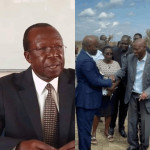
KOLE DISTRICT, UGANDA — In a historic session centered on socio-economic transformation, constitutionalism, and the rule of law, the Pala Ocol Clan Council on Saturday, June 13, 2026, adopted a progressive governance framework while reaffirming its commitment to peace and regional stability.
Speaking from the Pala Ocol Council Hall at the Peace Village in Ayer Sub-County, Awitong Dickson Ogwang Okul championed a visionary blueprint that anchors traditional leadership to measurable development, constitutional adherence, and inclusive diplomacy.
In a bold move to combat household poverty and foster self-reliance, the Pala Ocol Clan Council has established strict economic productivity benchmarks for its leadership structure. Under the new directive, traditional leadership will no longer be merely ceremonial but must be backed by a demonstrable commitment to food security and commercial agriculture.
“One of our conditions for leadership is evidence of productivity, either through farming, trade, small-scale industry, or services,” Awitong Ogwang Okul declared. “Without a minimum of two acres of coffee, cocoa, or Hass avocado, alongside substantial food granaries in your homestead within the next two years, you will not qualify for leadership in Pala Ocol.”
This directive firmly positions the Awitong as a development advocate, challenging leaders to model the economic transformation they wish to see in their communities.
Addressing the ongoing leadership dispute between the Lango Cultural Institution (LCI) and the Lango Cultural Foundation (LCF), Awitong Ogwang Okul emerged as a vital unifying force. Rather than entrenching divisions, he announced that Pala Ocol will maintain a neutral, bilateral, and inclusive approach focused entirely on the common good of the Lango people.
“Whether a clan leader belongs to LCI or LCF, as long as we have a common interest that brings us together for peace, unity, development, and promoting Lango Cultural Heritage without discrimination, we shall work with you,” Ogwang explained.
By refusing to take a polarizing stance, the Awitong underscores his role as a peacemaker, bridging gaps across institutional divides to ensure that cultural heritage remains a tool for connection rather than conflict.
Demonstrating profound respect for the judicial processes of the Republic of Uganda, Awitong Ogwang Okul advised the clan and the wider Lango community to exercise patience as the legal system resolves the cultural leadership conflict.
“Until a final verdict is made, Pala Ocol stands by the October 2024 ruling by Justice Odoki at the Lira High Court, which LCI has since appealed,” Ogwang stated. “Let us wait for the verdict with patience while operating under the law.”
The Awitong, a seasoned diplomat, also clarified the harmony between his cultural responsibilities and his national duties, reinforcing his alignment with state constitutional frameworks.
“As for me, I commit myself to the Diplomatic Service of the Republic of Uganda and my Clan of Pala Ocol, since under the law, my work as Awitong does not hinder me from public service in the Government,” he noted.
The high-level council meeting concluded with a powerful vote of confidence from the clan’s elders and representatives from across Lango Sub-Region. Following the comprehensive review and adoption of the clan’s new constitution and leadership conditions, the Pala Ocol Council officially granted Awitong Ogwang Okul a new 10-year mandate at the helm of the clan.
Under the newly adapted framework, the Awitong will lead the clan through this transformative decade, with the sole discretion to either express interest in re-election or choose retirement at the conclusion of his term. This renewal marks a stable, structured path forward for Pala Ocol, guided by a leader dedicated to the rule of law, peaceful co-existence, and prosperity.