LIRA, UGANDA – March 31, 2026
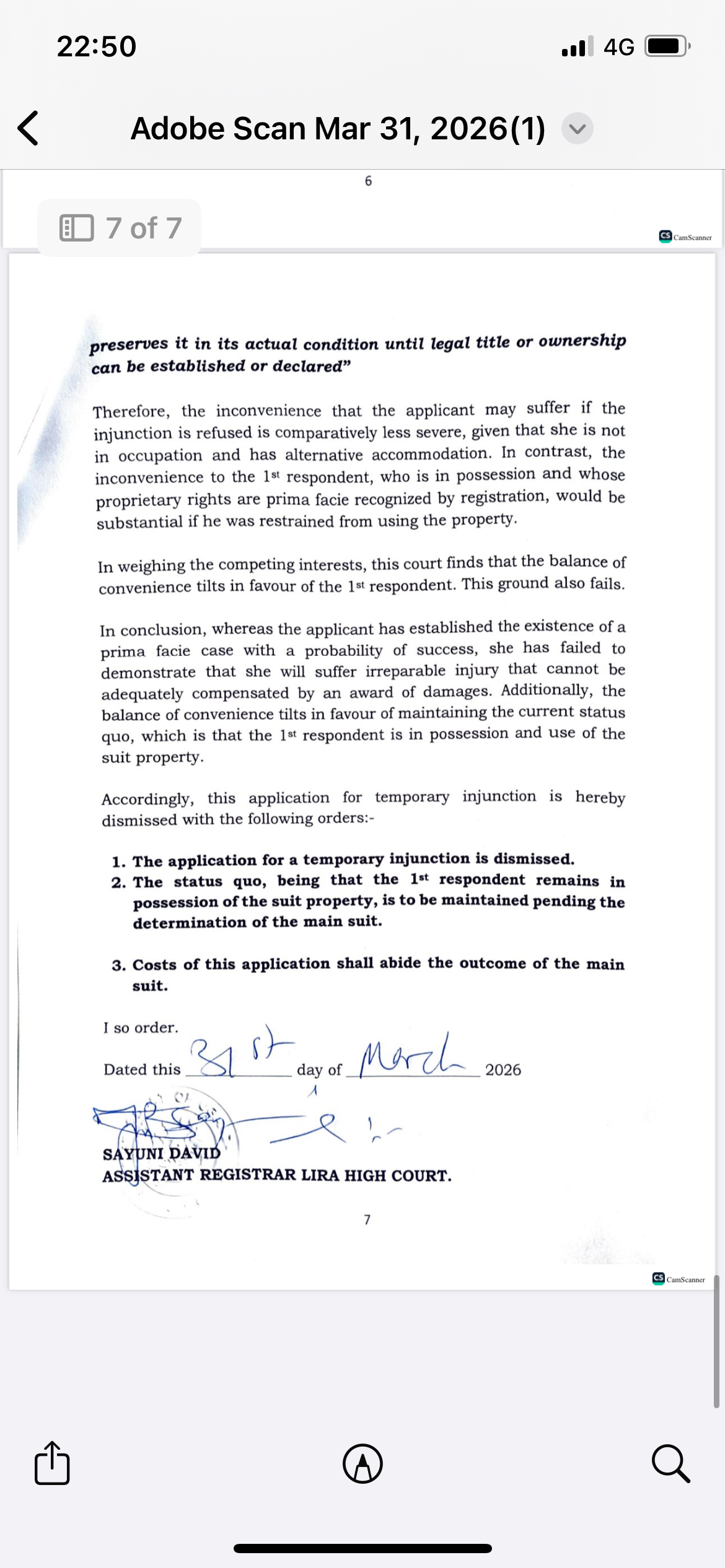
The High Court in Lira has dismissed an application for a temporary injunction filed by a woman seeking to restrain her estranged husband from dealing with a property she claims is jointly owned, ruling that while she established a prima facie case, she failed to prove she would suffer irreparable injury.
Assistant Registrar Sayuni David delivered the ruling on March 31, 2026, in Miscellaneous Application No. 24 of 2025, arising from Land Claim No. 15 of 2025.
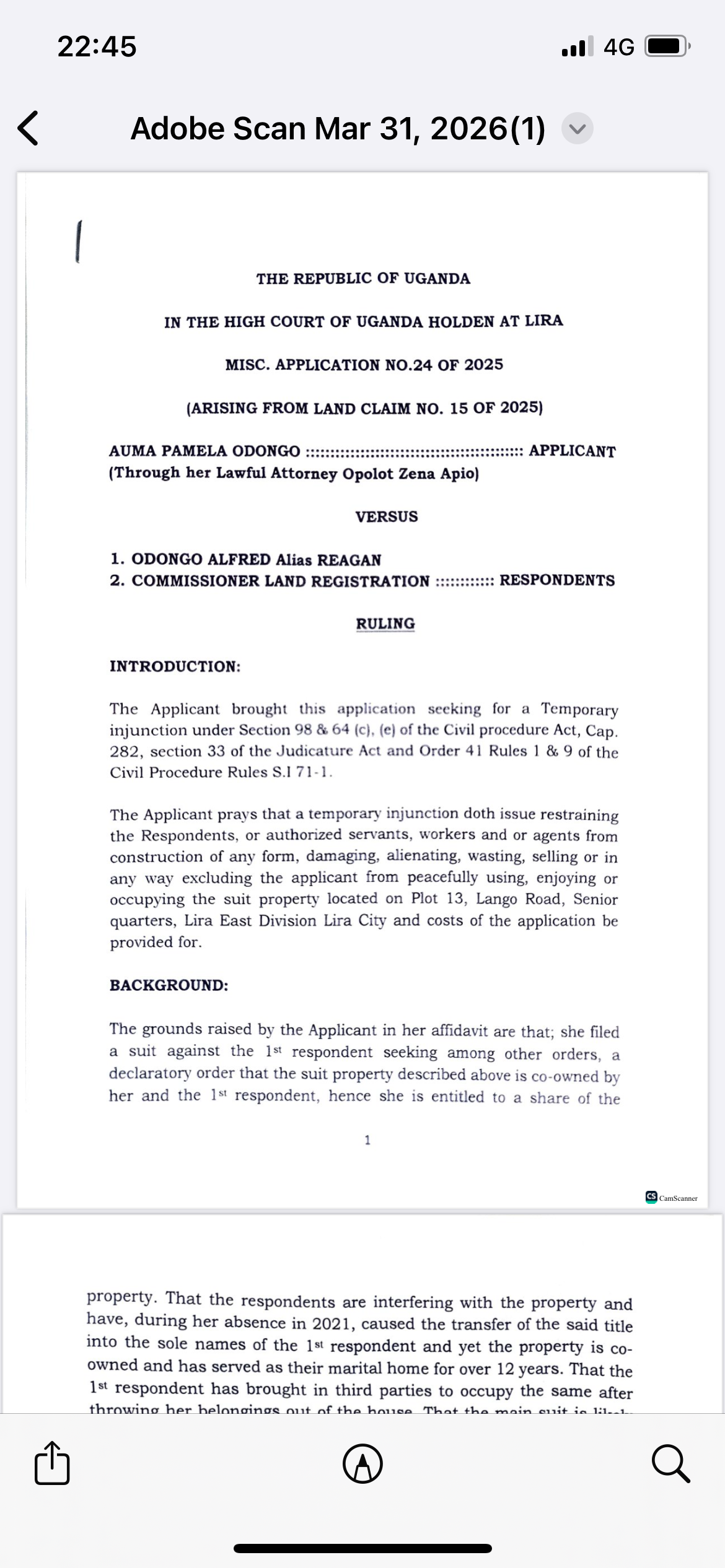
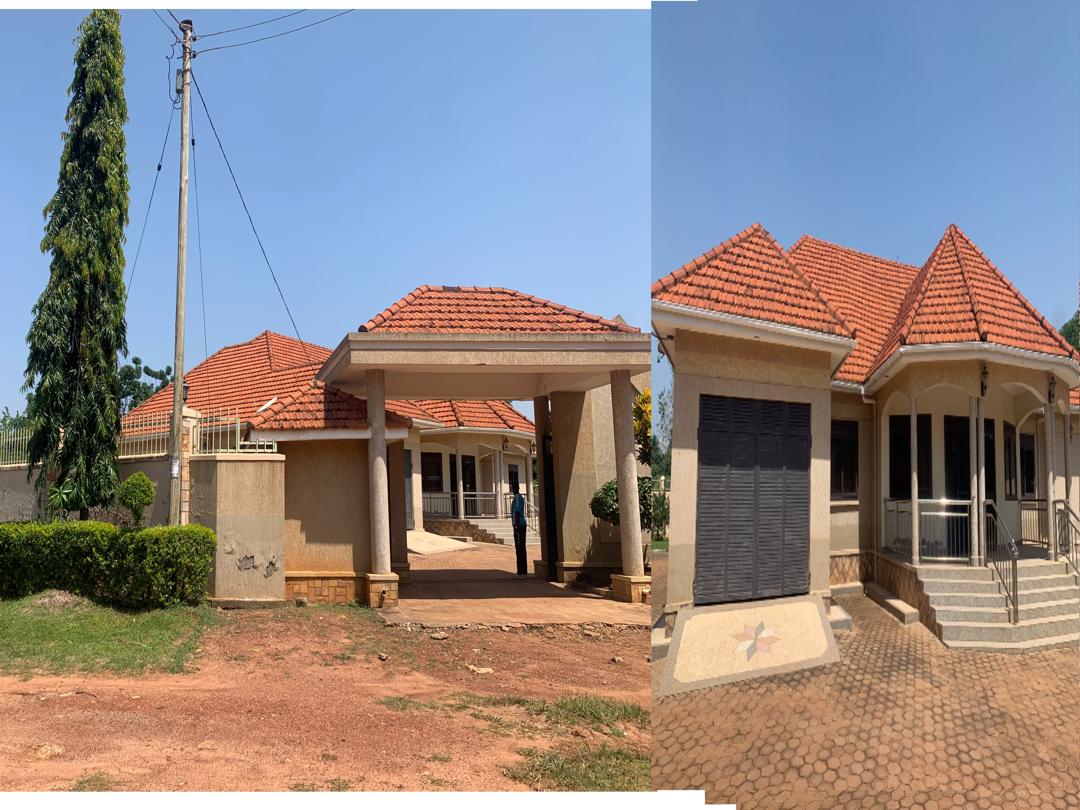
The applicant, Auma Pamela Odongo, acting through her lawful attorney Opolot Zena Apio, had sought a temporary injunction against Odongo Alfred Alias Reagan and the Commissioner Land Registration. The application sought to restrain the first respondent, his servants, or agents from constructing on, damaging, alienating, wasting, selling, or excluding the applicant from peacefully using and occupying the suit property located on Plot 13, Lango Road, Senior Quarters, Lira East Division, Lira City.
In his ruling, Assistant Registrar Sayuni applied the three conditions for granting a temporary injunction established in the case of Kiyimba Kaggwa vs. Hajji Abdul Nasser Katende (1985) HCB: whether the applicant shows a prima facie case with a probability of success, whether the applicant would suffer irreparable injury not adequately compensated by damages, and if in doubt, on which side the balance of convenience lies.
The court found that the applicant failed on the second ground of irreparable injury. The ruling noted three key factors that weakened her claim:
1. The applicant is not ordinarily resident in Uganda but resides in the United Kingdom, which "diminishes the immediacy and gravity of the alleged harm."
2. Evidence suggested the marriage may have been dissolved as far back as 2006, casting doubt on the claim of continued dependence on the property as a matrimonial home.
3. There was insufficient evidence that the property was at risk of being wasted or alienated, and the applicant's fears were "largely speculative at this interlocutory stage."
The court further observed that the applicant herself had prayed for general damages in the main suit, "which is indicative of the fact that the alleged injury is, to a significant extent, quantifiable."
On the balance of convenience, the court noted that during a visit to the locus in quo, it was confirmed that the first respondent is in actual possession, occupation, and use of the suit property, and is the current registered proprietor. The applicant, by contrast, is not in physical possession and has not been in occupation for a considerable period.
"Granting the temporary injunction as prayed would effectively dispossess the 1st respondent of property over which he currently exercises control and ownership rights, without conclusive determination of the competing claims," the ruling stated. "This would amount to altering, rather than preserving the status quo."
ORDERS OF COURT
The court dismissed the application with the following orders:
1. The application for a temporary injunction is dismissed.
2. The status quo, being that the first respondent remains in possession of the suit property, is to be maintained pending the determination of the main suit.
3. Costs of this application shall abide the outcome of the main suit.
Significance
The ruling underscores the principle that courts at the interlocutory stage are not meant to determine legal rights but to preserve the existing situation until ownership can be established at trial. It also highlights that claims of sentimental attachment to a family home, particularly where the applicant is not in residence, may not meet the threshold of irreparable injury required for injunctive relief.
The main suit challenging the ownership of the property is still pending determination before the High Court.